- UX Design
- UI Design
- IT Development
The Problem
The traditional sports betting market is saturated, and users often find playing with real stakes stressful or monotonous. What was missing was an innovative platform that combines risk-free fun with a fresh, witty mechanism that pushes players out of their comfort zone.Our Solution
We have created a reverse logic betting interface where the goal is to guess the “wrong” outcome. This unconventional twist brings new excitement to betting competitions, while the pure gaming experience without real stakes and humorous mechanics result in a stress-free environment and higher user engagement.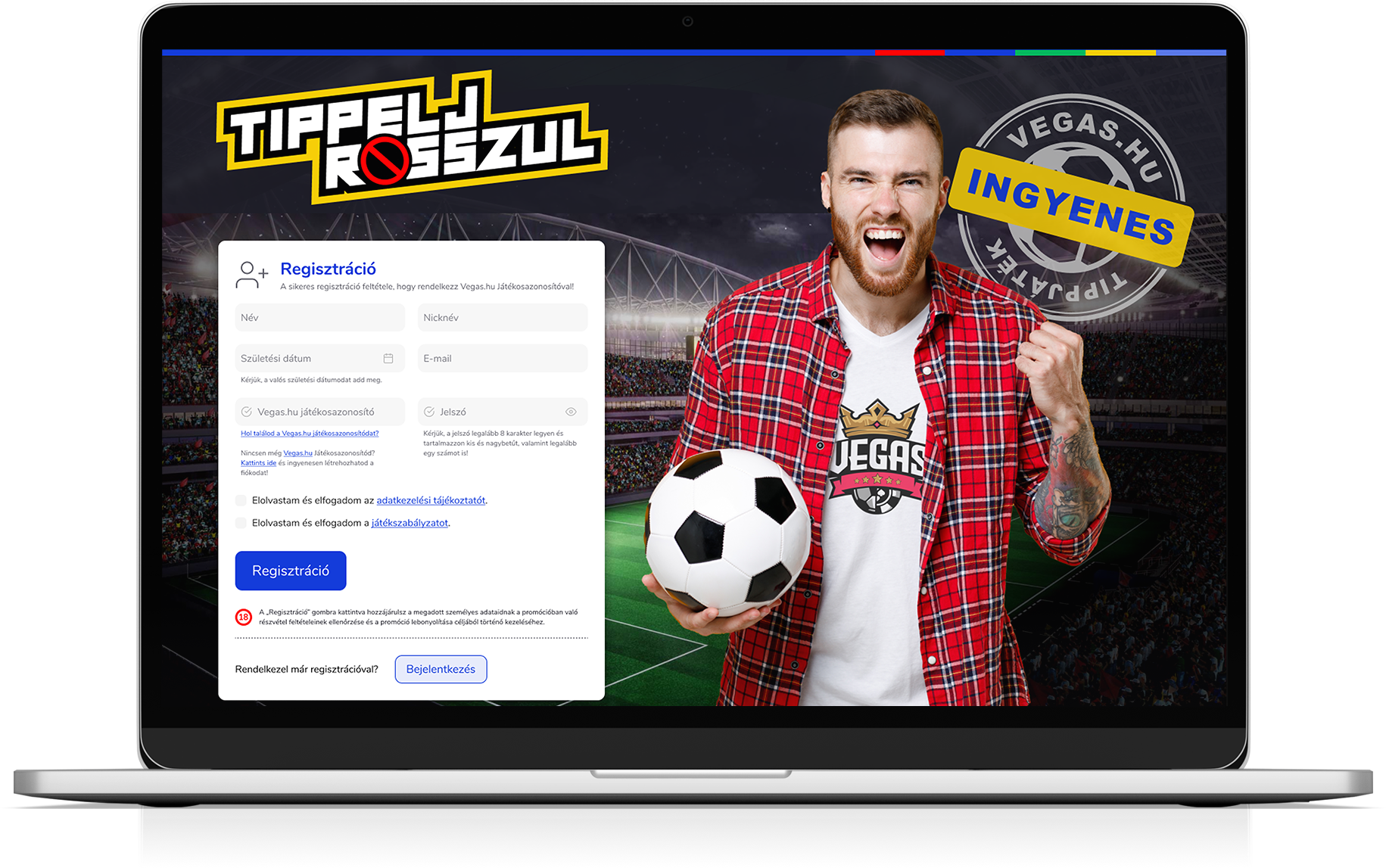
UX Research: Understanding the "loser" mentality
In the research phase, we investigated why traditional betting causes anxiety. User interviews revealed that players often feel: "if I had bet on the opposite, I would have definitely won". We used this mental model as a basis. During the competitor analysis, we saw that the market was saturated with serious, sterile interfaces, so the need for a humorous, light and inverted approach became clear.
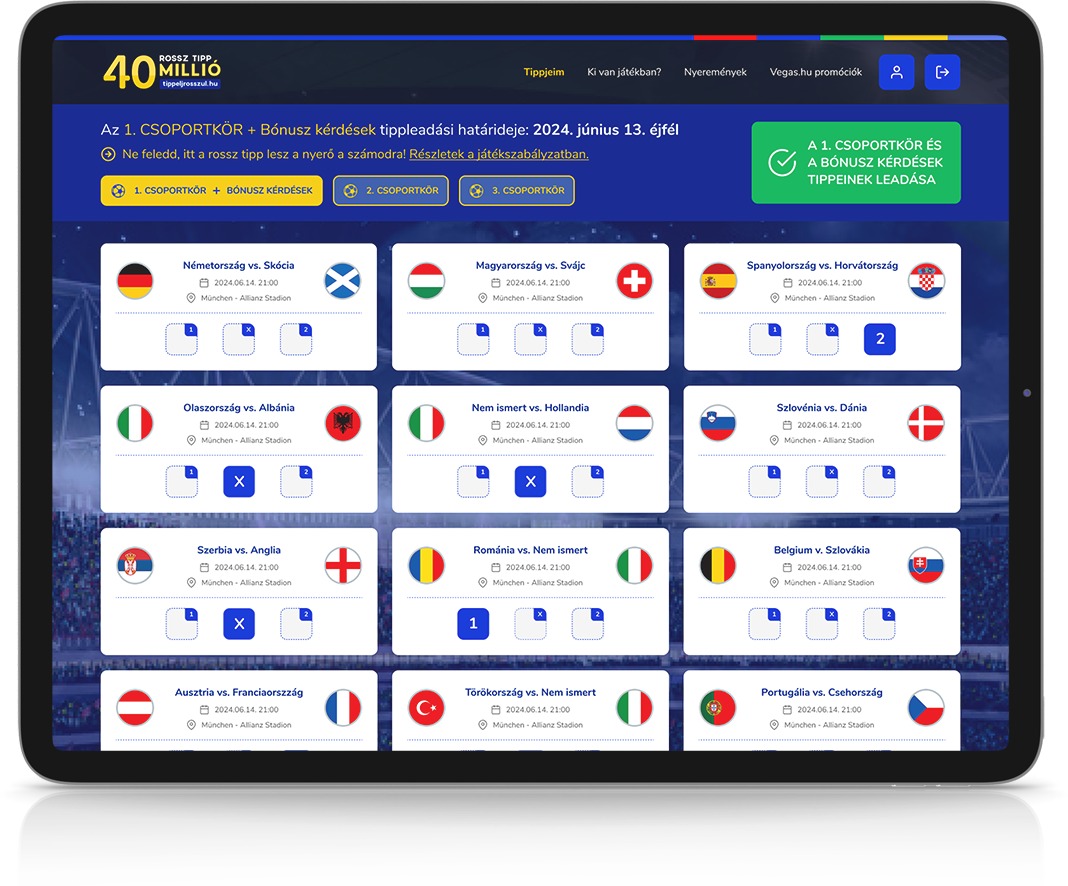
The importance of UX design: Against the power of habit
The biggest challenge was breaking the established patterns. Since users' brains are wired to see a "successful" bet as green and positive, we had to call on design to help us reframe this. During the design, the alignment of visual hierarchy and microcopy was critical: we created an interface where the visual reward for a “bad” choice makes the unique rules of the game clear, avoiding cognitive dissonance.
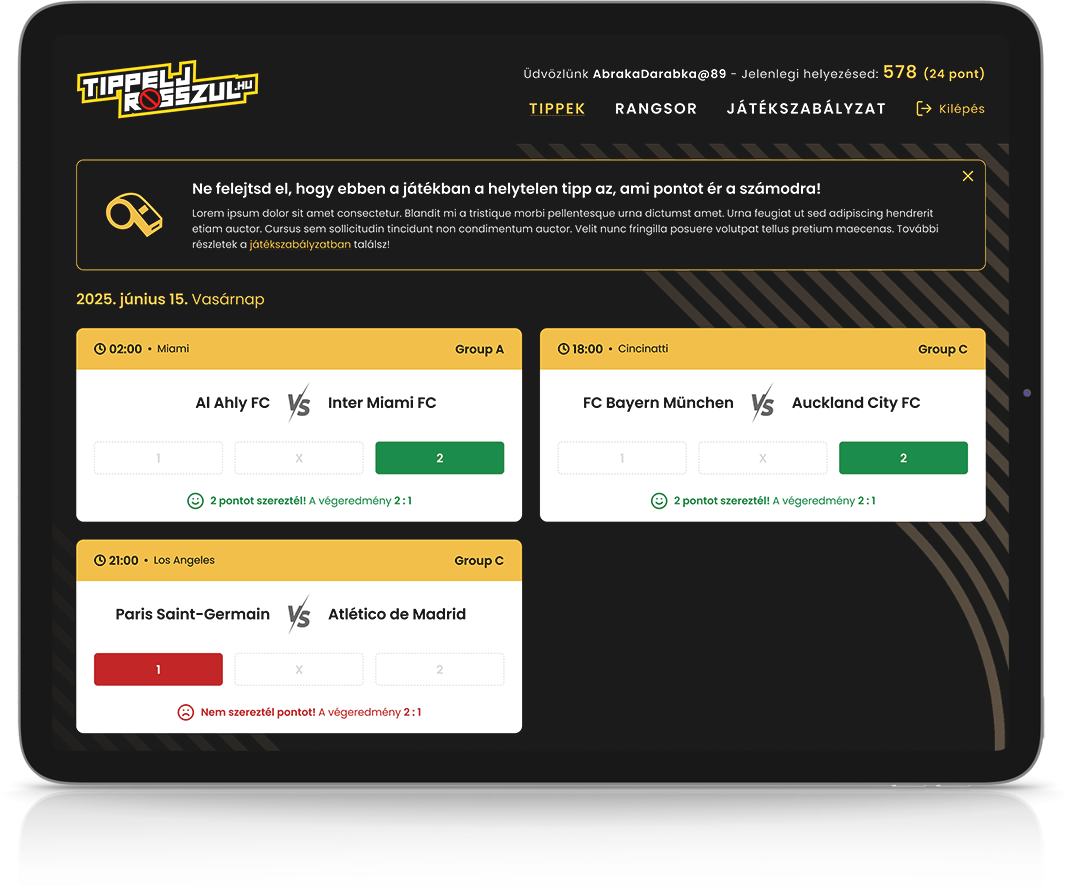
Education and responsible gaming: No stakes, no worries
Since the game takes place without real money, one of the main tasks of the UX was educational onboarding. We had to make it clear that this is a safe “sandbox” where analyzing sports statistics remains fun. The interface does not feed gambling addiction, but encourages strategic thinking and deeper understanding of sports, while gamification elements focus on the social experience rather than financial risk.
Summary of the design approach
The project proved that UX is not only about simplifying processes, but also about creatively disrupting user expectations if it leads to a better and less stressful experience.